27/11/2025
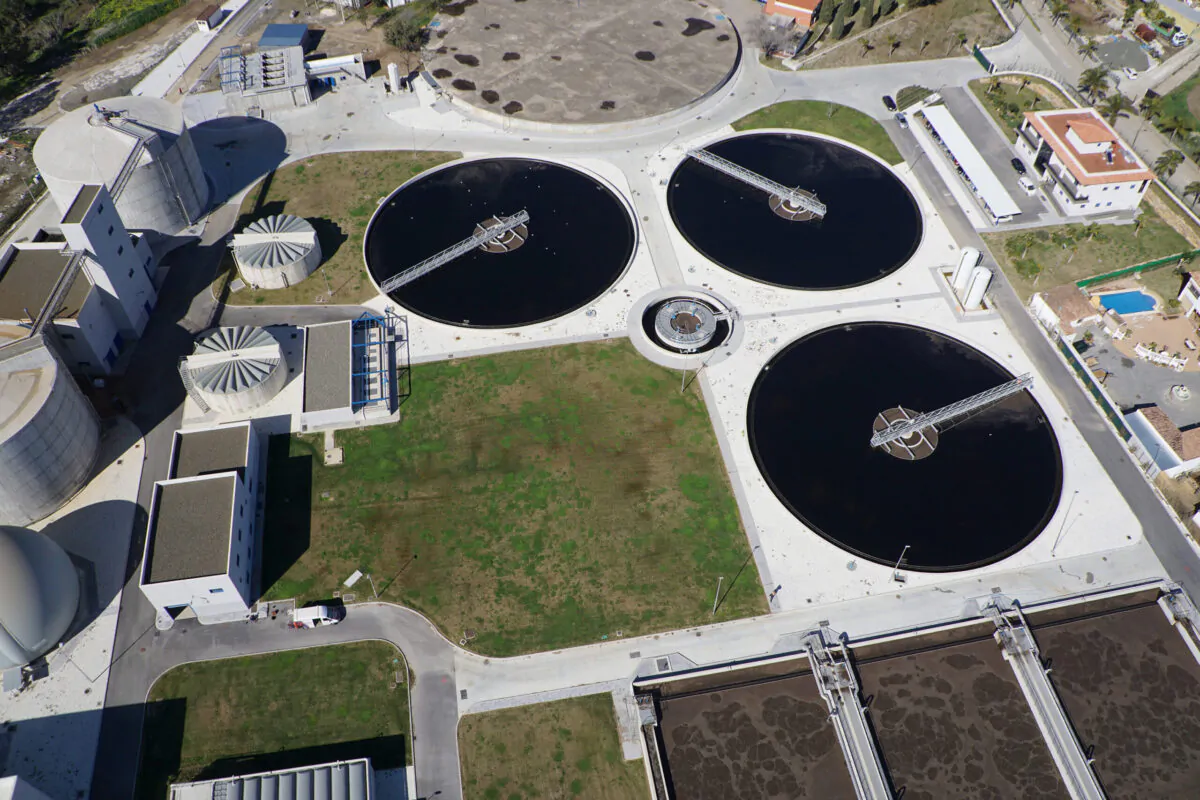
Sando Construcción and Sando Agua are developing a project to assess how wastewater with high conductivity can be conditioned for irrigation use. The initiative is co-funded by the Andalusian Technology Corporation (CTA) and supported by the Environmental Engineering and Management Research Group (GIGA) of the University of Málaga (UMA).
The R&I project, entitled Electrodialytic Desalination of Wastewater (DEAR), proposes the use of electrodialytic desalination techniques to condition reclaimed water obtained from tertiary treatment processes at wastewater treatment plants.
Conductivity—the ability of water to conduct electrical current as a result of dissolved salts—has a direct impact on water quality. Controlling conductivity makes it possible for water to be suitable either for consumption or, as in this case, for irrigation of recreational or agricultural areas.
María José Martínez Salaverri, Technical Director of Sando Agua, explains the origin of the DEAR project: “It emerged from the need to solve the problem of high salt concentrations in reclaimed water for irrigation in coastal areas, while also obtaining high value-added by-products during the process. It represents the Sando group’s commitment to innovation and the use of new technologies in the water sector, led by Sando Agua and made possible thanks to the support of CTA.”
Carlos García, Technical Manager for the Building and Civil Engineering sector at CTA, highlights that Sando Agua’s DEAR project “marks a milestone in the development and application of wastewater regeneration technologies, delivering higher levels of efficiency, effectiveness and profitability, reduced input requirements, improved integration of renewable energy sources, and clear opportunities for by-product valorisation.”
As a technology-driven company specialising in the advisory services and comprehensive management of water infrastructure and hydraulic projects, Sando Agua proposes electrodialysis as an optimal technology for improving water quality. Electrodialysis uses an electric field to move ions present in the aqueous liquid through selective membranes, effectively separating salts from the water.
This technique enables a significant reduction in salt concentration in reclaimed water and offers the possibility of producing acidic and basic streams from the extracted salts. This specific capability is being investigated by Sando and could allow their use in various industrial processes and water treatment applications.
One of the objectives of the DEAR project is the generation of high value-added chemical by-products through the application of electrodialysis to water treatment.
In addition to producing desalinated water suitable for irrigation, the process could enable the recovery of by-products commonly used in water treatment, such as hydrochloric acid, ferric chloride, ferrous chloride and sodium hydroxide, as well as the potential production of gaseous oxygen and hydrogen.
To achieve this, Sando will design a treatment system based on an electrodialysis cell, combining compartments with ion-exchange membranes and electrodes made from specific materials.
The project aims to maximise the value of water resources by enabling their use and reuse, minimising Waste generation and harnessing chemical by-products already present in the water.
The Electrodialytic Desalination of Wastewater project is being developed within a certified R&I management system in accordance with UNE Standard 166002 and is aligned with Sando’s Sustainability Master Plan. This plan defines the company’s ESG (Environmental, Social and Governance) roadmap, specifically under its second strategic line focused on circularity and innovation for the protection of natural capital.
Don’t miss anything.